Column:
Connecting People To Nature Through Board Games
Overall Skills
Product Design
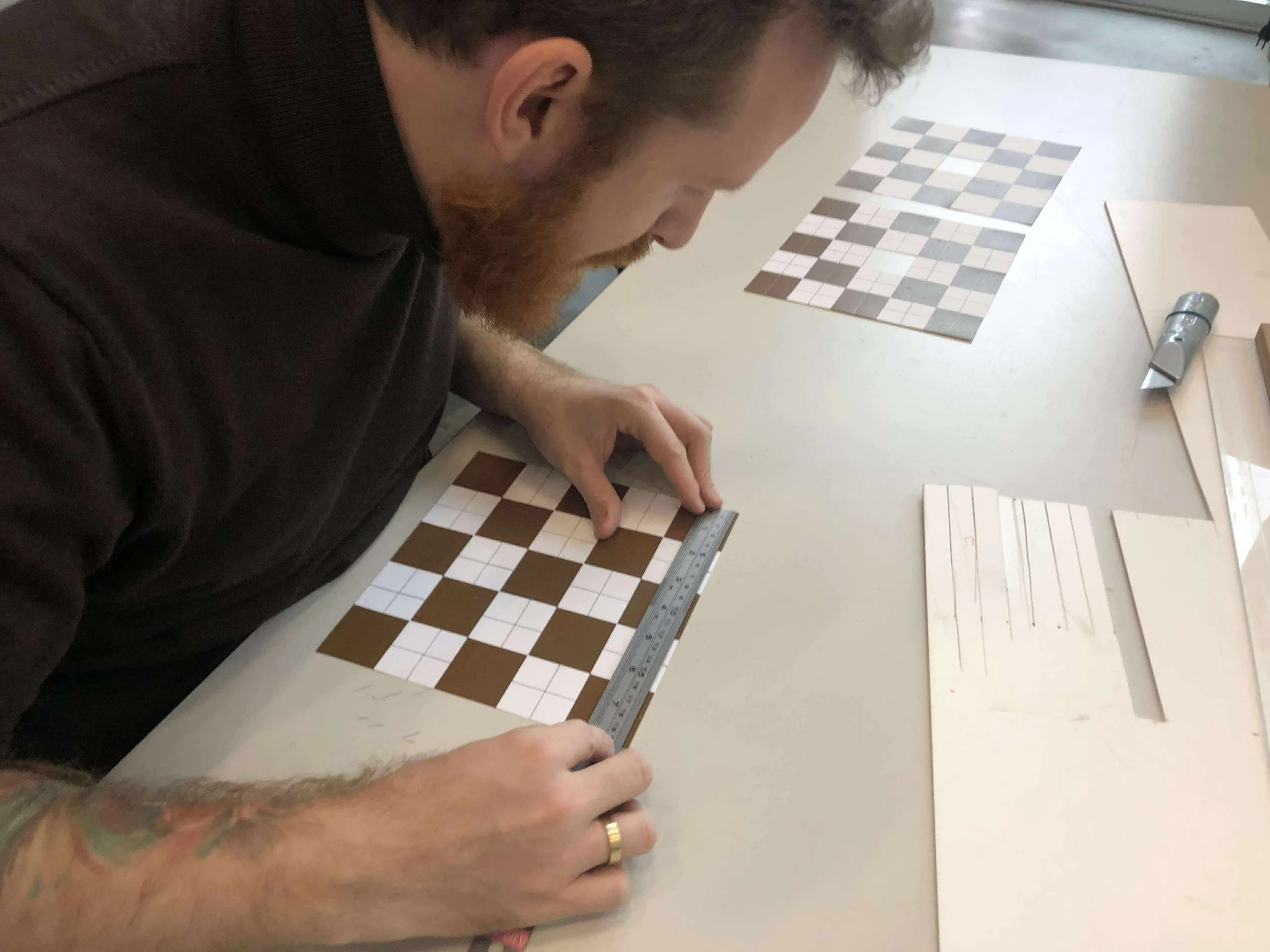
Design of physical products, including cards, board, rulebooks, cheat sheets, and more.
Prototyping
Extensive prototyping of rules, gameplay elements, the physical form and function of the game, and more.
Interaction Design
Creation of interaction design, such as how it feels to hold and interact with elements of the game, as well as the interacting gameplay elements.
Exploring Nature
At the IT-University of Copenhagen, I took the class “Interaction Design” where we were tasked with creating a piece of design that could benefit nature and not humans. In other words, nature-centred design.
A specific site was chosen for us beforehand, namely “Amager Fælled”, a human-made nature area on the eastern side of Copenhagen. The site had previously been a waste dump, which has since been converted into an area filled with trees, paths, and wildlife.
In order to figure out how to design for nature, we first had to establish a relationship with the site in question. To do this, we started by choosing a small 2×2 meter area beforehand and utilizing that due to the sheer size of the site otherwise. Here, we built small containers for animals or nature to inhabit, placed poles of different materials to see how nature would affect them, and placed food both above and below the surface to see what would happen.
A Central Discovery
Designing The Game
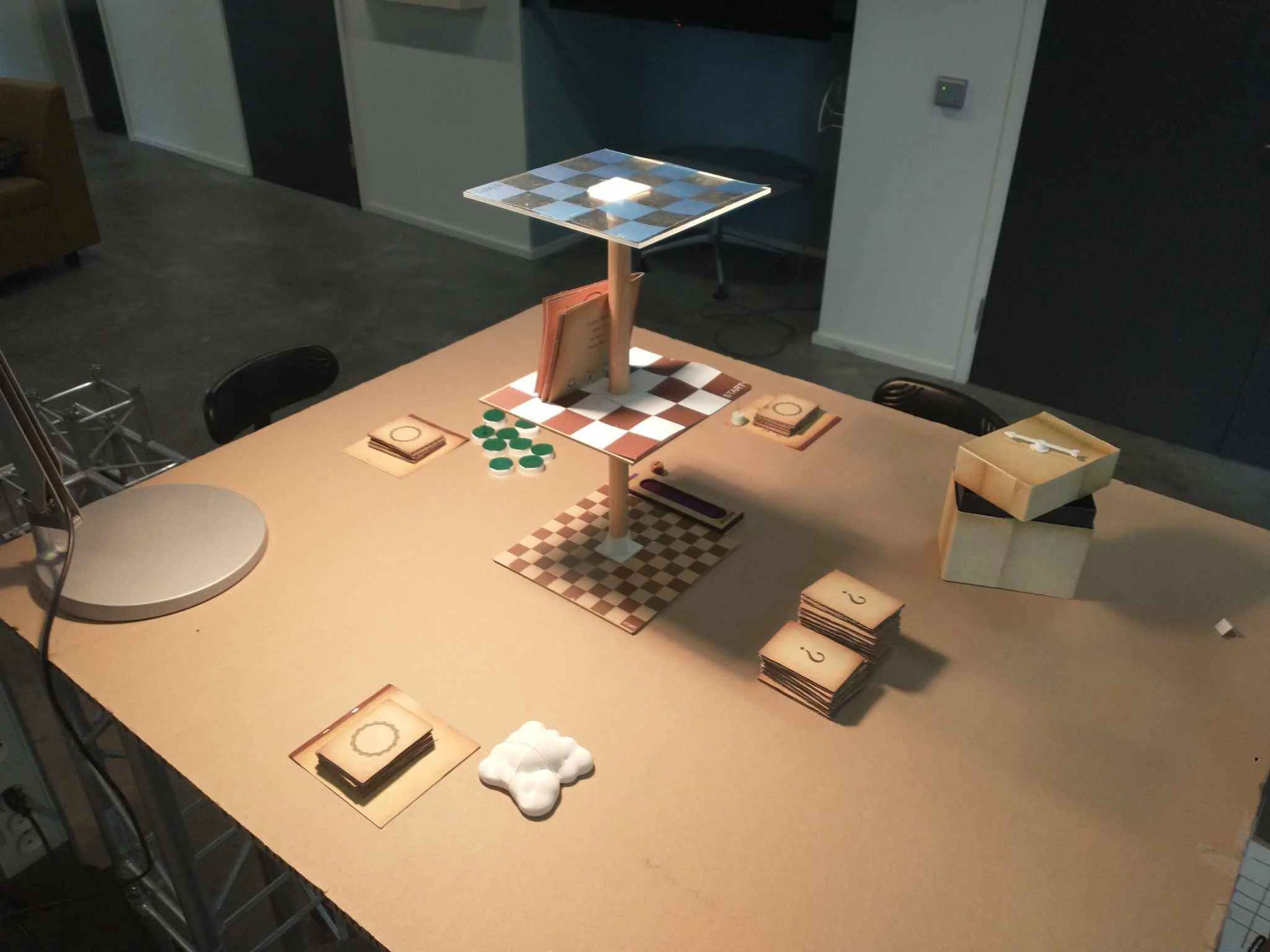
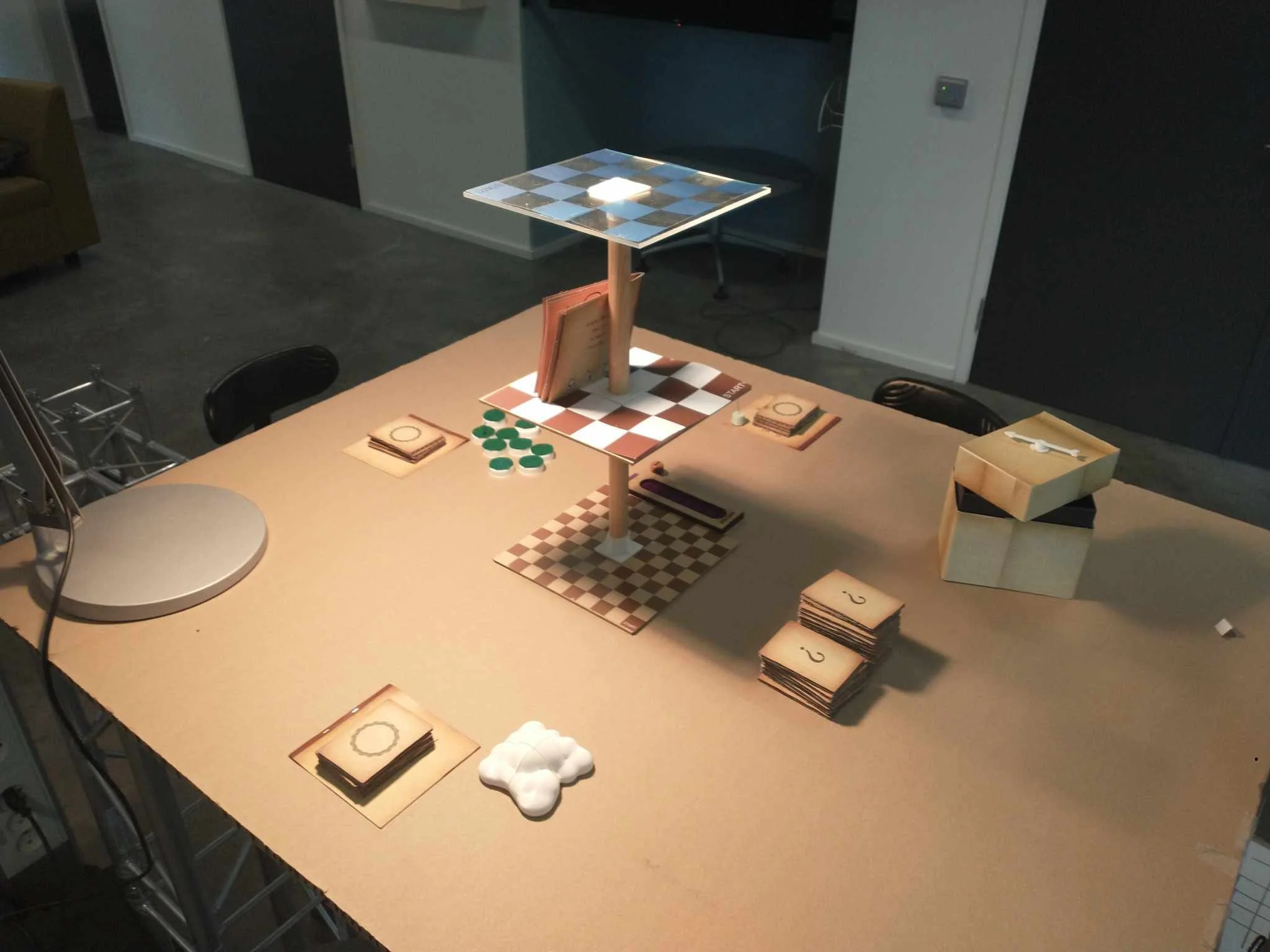
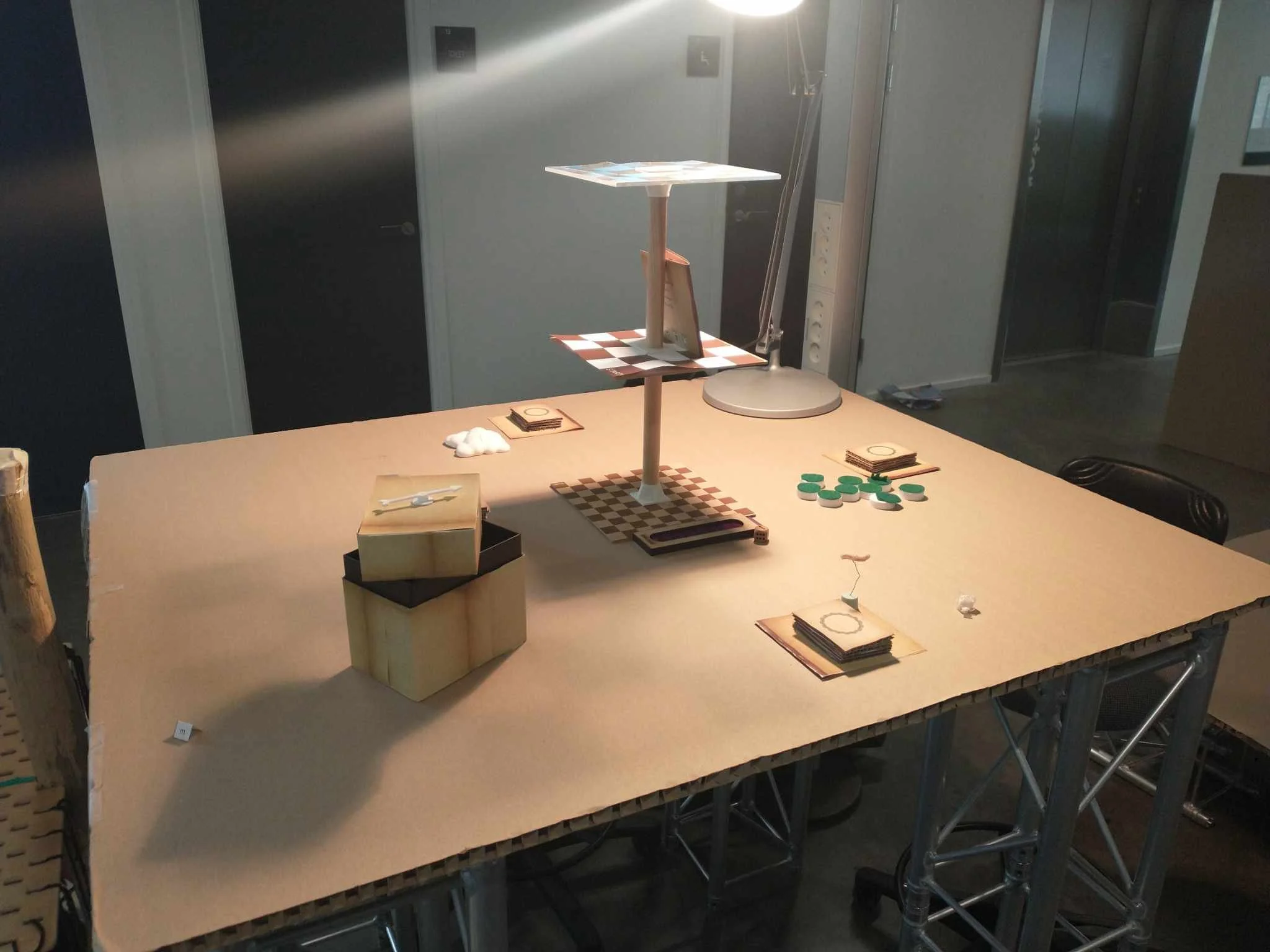
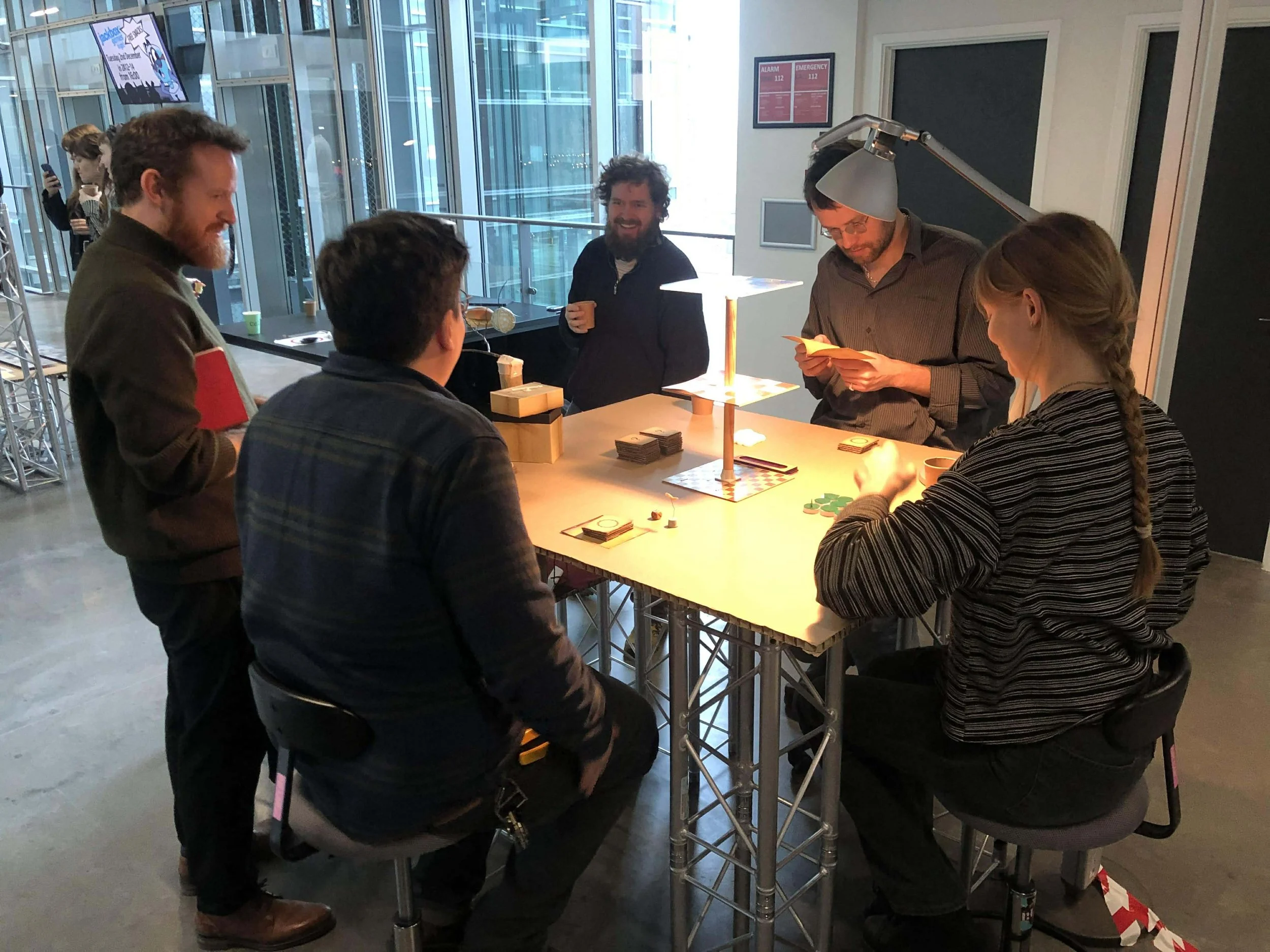
Creating the board game itself consisted of many different explorations of form, function, rules and playtests. A core idea throughout the process was to highlight the different planes of nature - namely underground, surface and above ground. Therefore, we quickly landed on the game having a form of 3D board, with different boards representing different planes.
From this, we also assigned nature actors to each board. Here, we went with “worm” for underground, “grass” for surface and “cloud” for above ground. Each were given a specific set of abilities in terms of impacting the game and being able to move between planes. For example, the cloud could rain which impacts the overall wetness level of the board. This impacts the worm’s ability to move, and if a flood happens it is moved to the surface level. If the surface level spot is inhabited by a piece of grass, the grass is destroyed. Complex I know… but just know that everything is interconnected in some way.
To make the complexity of Column more digestible for players, we decided to with standard chess-like grids for the boards themselves as players are familiar with their function. While the grids have different layouts, and the actors are able to move on them differently, players instinctually understood the basics.
The players were also provided with a rulebook, and cheat sheets so that they could figure out the rules themselves, and continually look up certain elements of the game.
Through our efforts, we discovered something that triggered the rest of the development of Column. One of the pieces of food that had been placed underground had clearly been dug up by some sort of animal. Now, while not groundbreaking, this triggered a discussion about what it could have been… was it a fox? a bird? a dog? Or something else?
From this, we discovered that what actually established a relationship with nature was not nature itself, but rather our fantasies about how nature worked and what existed out there. Through some discussions around this fact, we landed on the idea of creating a board game where one could take on the role of an actor in nature, almost like one would within a Dungeons & Dragons session.