OPIAID:
Towards Individualized and Algorithmic Opioid Administration
Overall Skills
UI/UX
Creation of the User Interface and well as the User Experience.
Project Management
Leading the design from start to finish
Co-Design
Deep involvement of stakeholders throughout the design process.
OPIAID
OPIAID is an algorithmic tool by research from Bispebjerg Hospital in Denmark and the IT University of Copenhagen, designed to help reduce the amount of side effects people experience after a surgery - from nausea to pain.
It does so by recommending a specific opioid dose based on individual patient variables, and using those to calculate a recommended dose.
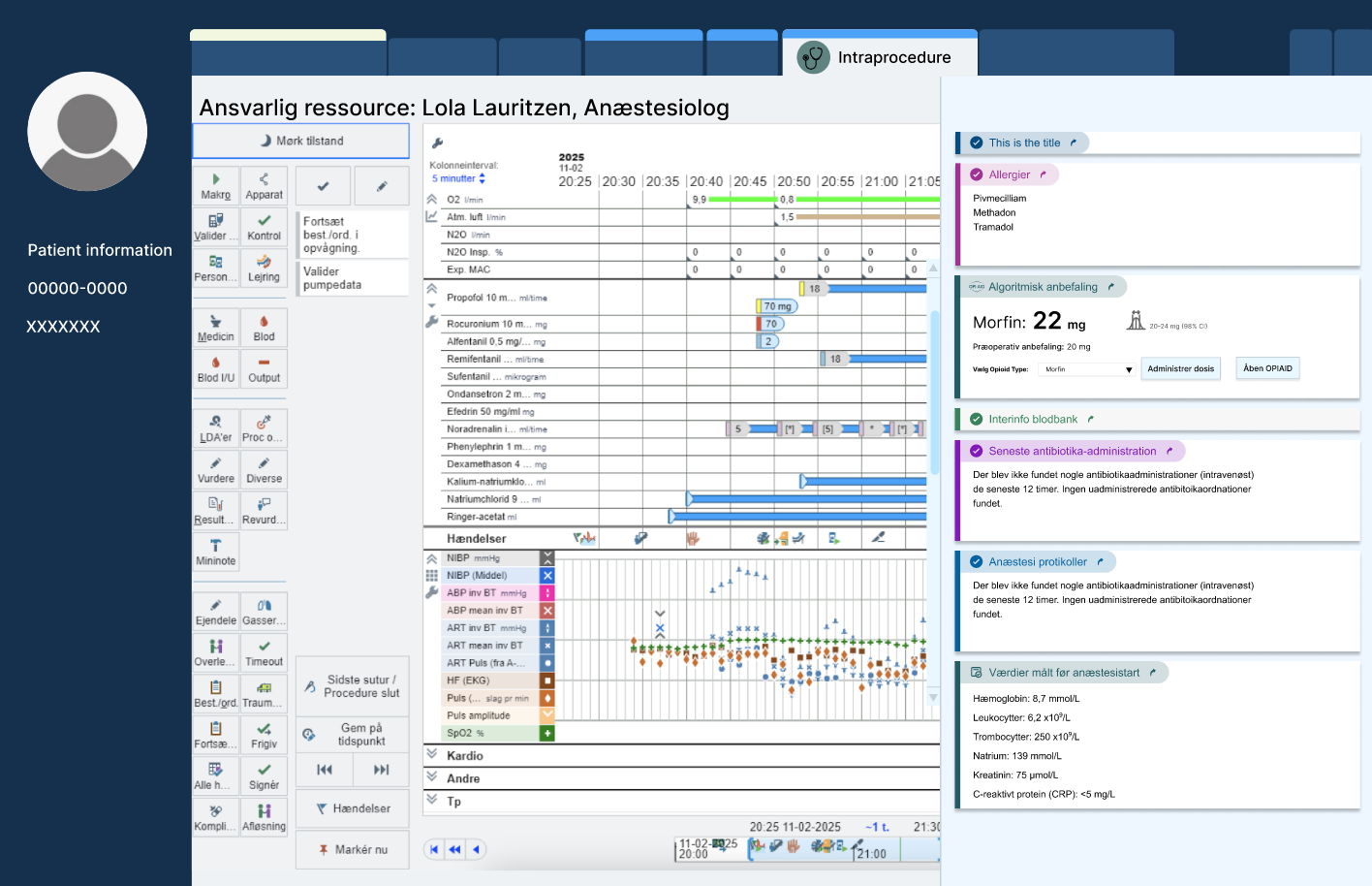
I had the privilege of the designing the User Interface for OPIAID, as well as the User Experience, which had to be implemented within the electronic medical records system Sundhedsplatformen.
OPIAID is still in the implementation phase.
How Does Anaesthesia Work?
Designing The Interface
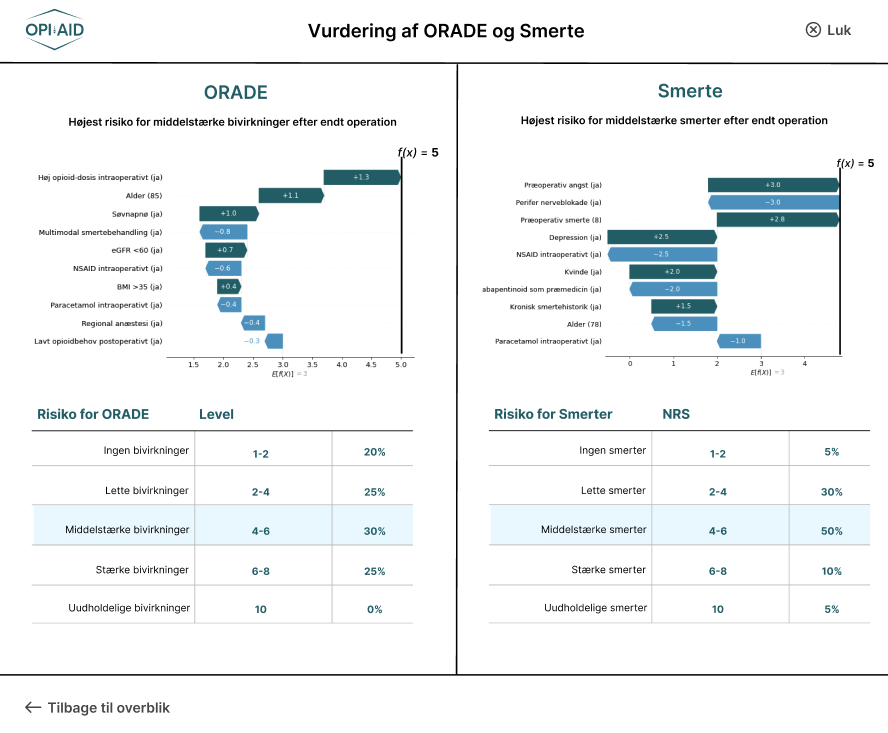
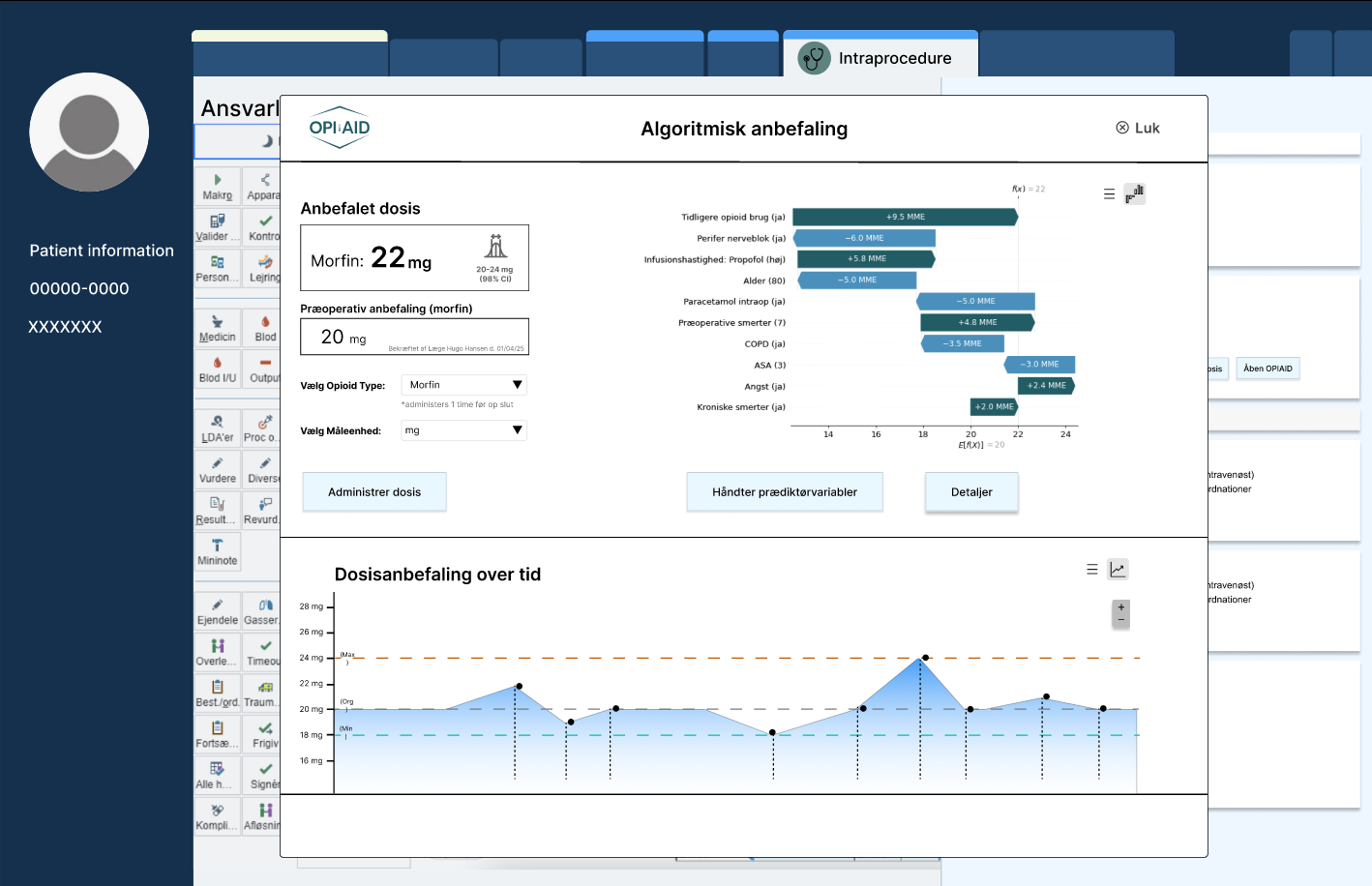
The interface is separated into two parts, the panel view and the details view. The panel view is designed to be a quick recommendation for clinicians, not taking attention away from other aspects during a surgery.
However, OPIAID also supports the ability to explore the recommendation further and look into the specific variables and judgements that the algorithm has made, giving both agency and educational opportunity to the clinicians.
The design constantly had to balance between what the clinicians wanted, what Sundhedsplatformen support, and what was feasible with the data behind the algorithm. However, the design artefacts themselves served as boundary objects between parties, allowing them to see our vision, as well as understanding each other.
The first thing I had to do was figure how anaesthesiologists and anaesthesia nurses actually, how this tool would help them and how it would potentially impact their workflow in negative ways.
This was done by a combination of clinical hospital visits and well as semi-structured interviews, presenting them with different concepts and storyboards to get a sense of what was important for them.
But those weren’t the only stakeholders! Since OPIAID is deeply embedded within the Danish healthcare system, it was also important to get the perspectives of the more bureaucratic actors around OPIAID, to make sure that the design lived up to regulations and expectations.